Lower Overdenture Soft Tissue Improvement: Surgical Phase
In this article, we present a new case of lower overdenture soft tissue improvement. Proper mucosal quality is essential to ensure the long-term success of implant-supported overdentures.
A few weeks ago, we treated a patient with four implants in the mandible and extensive bone defects. We explanted two implants and placed four new ones to support a full lower overdenture.
📎 See the first surgical phase here
Lack of Keratinized Tissue After Implant Healing
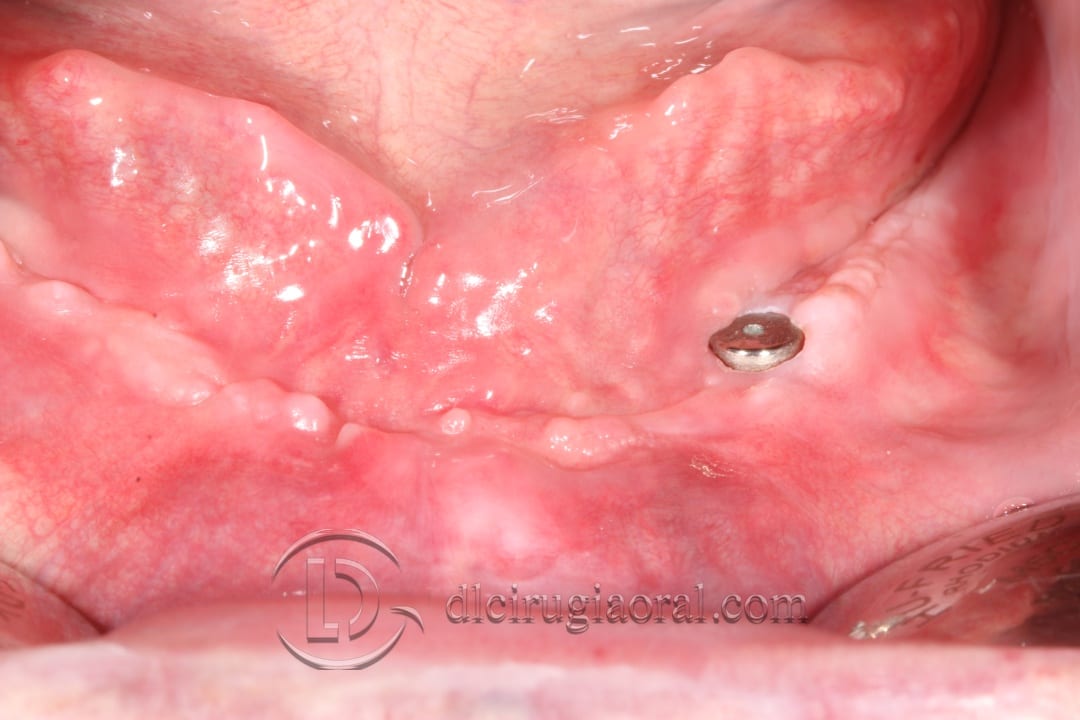
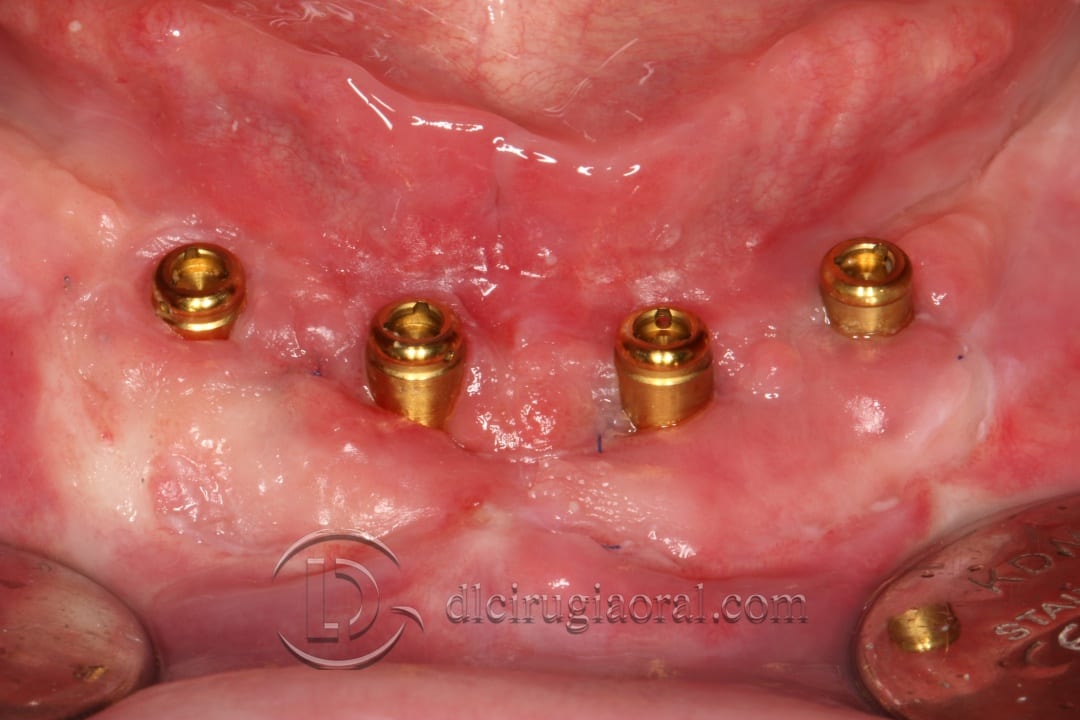
After three months, the implants had osseointegrated. However, we observed poor soft tissue quality. The patient had minimal attached gingiva and reduced vestibular depth—factors that increase the risk of inflammation.
Improving Mucosa Around Mandibular Overdentures
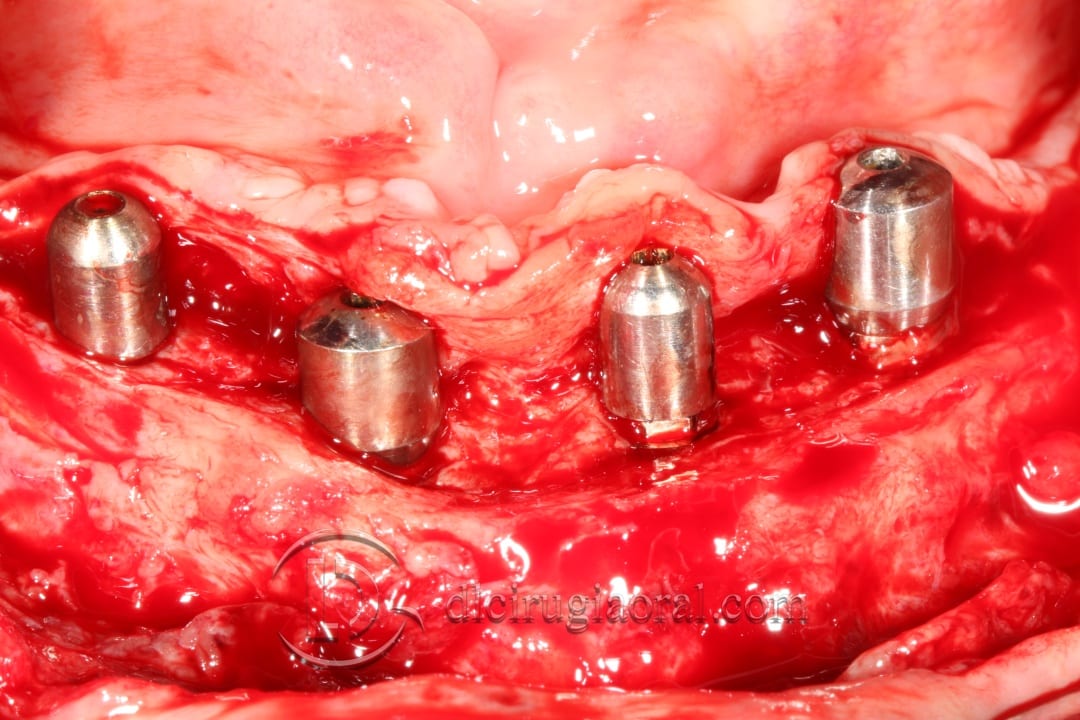
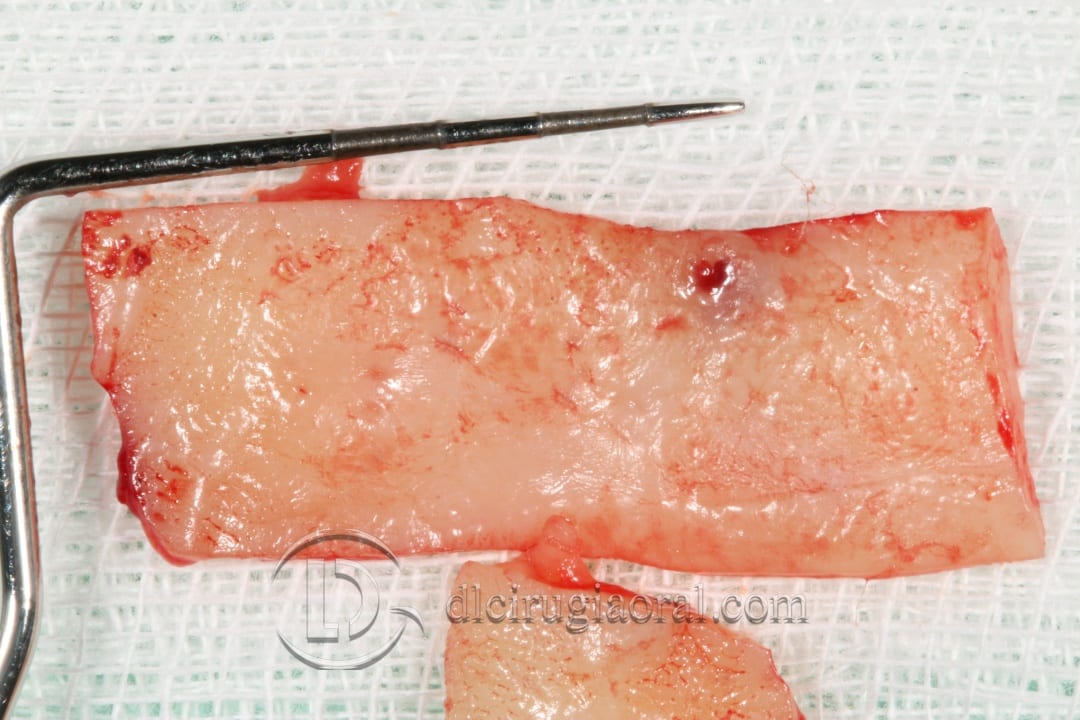
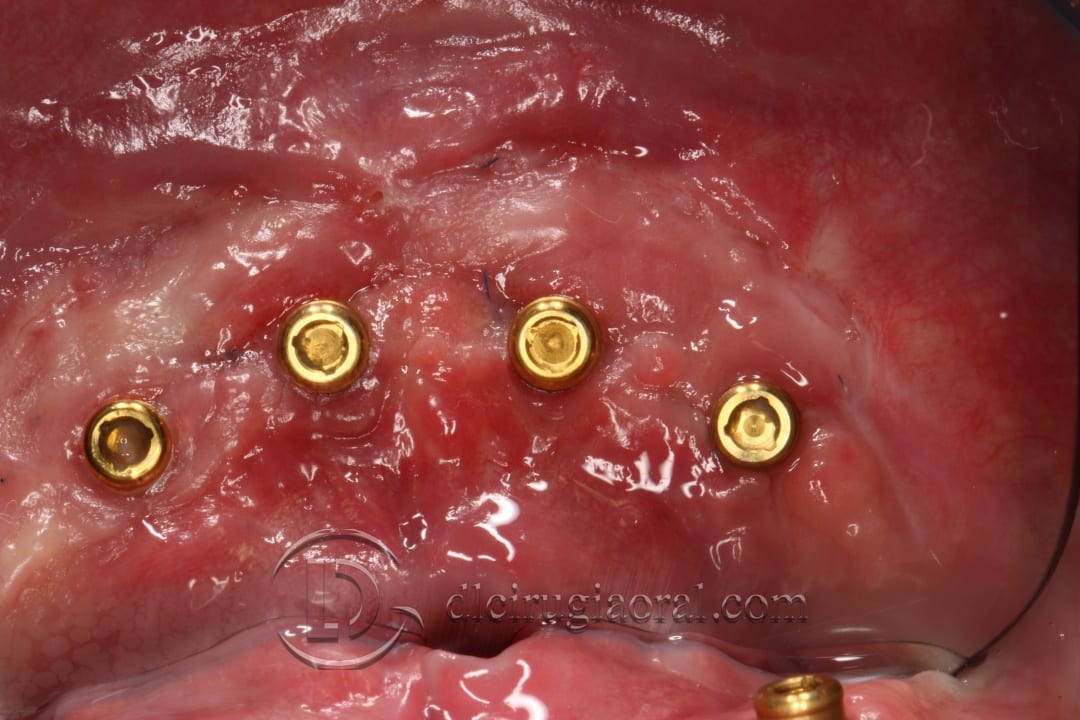
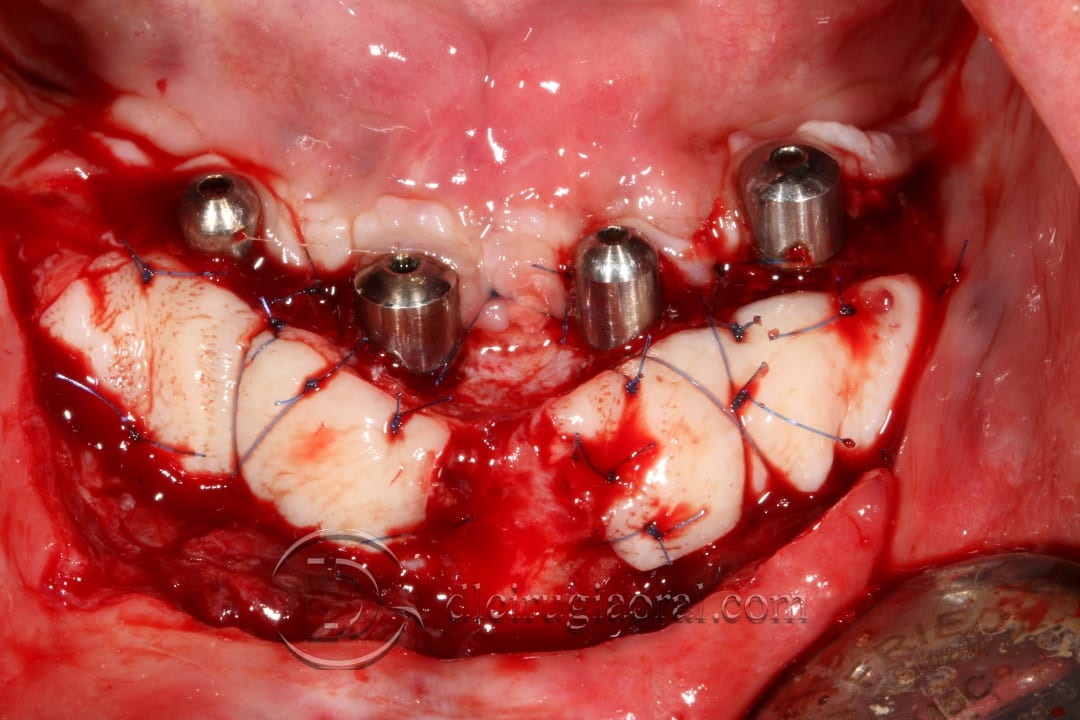
To correct this, we performed implant exposure and placed healing abutments. At the same time, we grafted palatal epithelial tissue using supraperiosteal access.
The graft was sutured to the periosteum to ensure integration. This technique reinforces soft tissue protection around implants.
Benefits of Soft Tissue Grafting in Overdentures
Enhancing soft tissue in overdenture cases improves hygiene and reduces peri-implant complications. A wider band of keratinized mucosa also supports prosthetic stability.
This approach ensures long-term function and aesthetics for mandibular overdentures.
Why Plan for Lower Overdenture Soft Tissue Improvement
Including lower overdenture soft tissue improvement in your treatment plan increases success rates. It complements bone grafting and implant placement strategies.
🔗 More soft tissue grafting cases here
See below photos of the surgery and healing phases.